Exhibitions on View
Collections On View
The Making of a Museum: 50 Years
For fifty years, the Neuberger Museum of Art has fostered learning, sparked the creative process, and investigated understandings of the world in which we live through its collections, exhibitions, and education programs.
Its first exhibition, a 1974 project entitled The Making of a Museum: 1, featured many of the works of art that form the core of our current collection.
In honor of the Museum’s 50th anniversary, a multi-part exhibition entitled The Making of a Museum: 50 Years features four distinct projects that will be unveiled at different times over the course of Spring 2024. Each tells a part of the compelling story of how the Neuberger became one of the country’s most respected and important academic museums.
- The Promised Gift tells the story of Roy R. Neuberger’s 1969 grand and optimistic philanthropic contribution, a gift of 300 works of art to the State University of New York. The exhibition features a selection of the works encompassed in that promised gift, which was accessioned into the collection of the Museum over the course of its first ten years.
OPENS: January 24, 2024 - 1969—1974 tells the story of the inception of the Museum. It explores the role of Roy R. Neuberger as one of the most important collectors of his day, the conceptualization, design, and construction of the Museum, and its use in the early 1970s by the students and faculty of Purchase College prior to the formal opening of the Neuberger Museum of Art in 1974.
OPENS: January 24, 2024 - Threnody is a 250-foot-wide site-specific painting created by American artist Cleve Gray for the opening of the Neuberger Museum of Art. At that time, college students across the country were demonstrating against the conflict in Vietnam. An active anti-war supporter, Gray saw this commission as an opportunity to express his hope for humanity’s spiritual and emotional healing.
OPENS: February 21, 2024 - 1974—2024 tells the story of the years from the time of the formal opening of the Museum to the present. A multi-media installation, this project features key objects, exhibitions, programs, and transformative moments in the history the Neuberger Museum of Art.
OPENS: March 20, 2024
The Making of a Museum: 50 Years stories, exhibitions, and public programs have been organized by the staff of the Neuberger Museum of Art.
The Neuberger Museum of Art is proud to be a grantee of ArtsWestchester with funding made possible by Westchester County government with the support of County Executive George Latimer.
The Neuberger Museum’s programs are made possible by the New York State Council on the Arts with the support of the Office of the Governor and the New York State Legislature.
50th Anniversary Events
50th Anniversary Events
Throughout 2024 the Neuberger Museum of Art, one of the country’s most respected academic museums, is commemorating our 50th anniversary and groundbreaking commitment to visual arts education.
Celebrate with us!
Neuberger Museum of Art Golden Anniversary Celebration
Date: Saturday, April 13, 2024
Time: 7:00pm - 10:00pm
Location: Neuberger Museum of Art
Tracy Fitzpatrick, Director, and the Board of the Friends of the Neuberger Museum of Art, will host the Museum’s Golden Anniversary Celebration on Saturday evening, April 13, 2024, within the exhibition, The Making of a Museum: 50 Years. The evening will include a “Moveable Feast” including cocktails, hors d’oeuvres, savory stations, and sweet bites; musical performances; and valet parking.
During the celebration, the Neuberger Museum of Art will proudly honor:
JANET LANGSAM
Passionate Advocate for the Arts
FRED WILSON
Passionate Artist
LOIS BREGSTEIN
Passionate Volunteer
The charitable portion of each $350 ticket is $210.
Honor the Museum’s anniversary with an unrestricted charitable gift supporting programming and daily operations.
Contact:
Carrie Kahn Bianchi
Director of Development
Neuberger Museum of Art
914.251.6109
carrie.bianchi@purchase.edu
Individuals requiring accommodations for equal access to this event are encouraged to contact Ms. Bianchi as soon as possible so that a good faith effort can be made by the organizers to meet the identified needs.
NEU Neighbors: 50th Anniversary Open House
Date: Sunday, April 14, 2024
Time: 11:00am - 5:00pm
Location: Neuberger Museum of Art
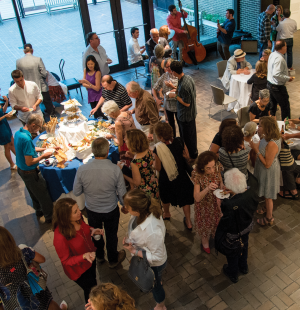
Friends and neighbors are invited to an Open House to celebrate the Museum’s 50th Anniversary.
Join us at the Museum for coffee, pastries, and incredible art during this retrospective of the Museum’s first half-century. All are welcome!
This is a free event but advance registration is requested.
Contact: Individuals requiring accommodations for equal access to this event are encouraged to contact stacy.leistner@purchase.edu as soon as possible so that a good faith effort can be made by the organizers to meet the identified needs.
Opening Reception for “The Making of a Museum: 50 Years”
Date: Wednesday, April 17, 2024
Time: 5:00pm - 7:00pm
Location: Neuberger Museum of Art
Join us as the Neuberger Museum of Art celebrates the opening of its retrospective, anniversary exhibition, The Making of a Museum: 50 Years.
Light snacks and beverages will be served.
This is a free event bud advance registration will be requested.
Registration for this event will open in January 2024.
Current Exhibitions
From Your Collection: Latin American, Caribbean, and Latinx Voices
December 6, 2023 - March 24, 2024
In an era in which individuals may live and work in multiple locations, often outside their native country, we may ask if it remains relevant to think in regional terms. This question is essential, as many artists prefer not to carry a national banner, but instead consider themselves actors engaged in a universal dialogue.
From Your Collection: Latin American, Caribbean, and Latinx Voices features a selection of paintings, works on paper, photographs, and sculptures that have been donated to, or purchased by, the Neuberger Museum of Art over the last decade. Many of these works tie to global contemporary debates, while also referencing specific realities through a variety of voices in order to better understand the global nature of the world we live in, and explore the multiple voices at the base of fruitful contemporary debates that challenge it.
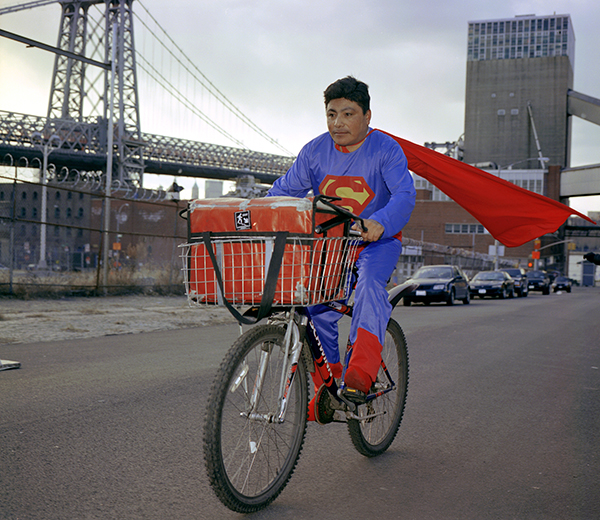
The exhibition showcases the work of fifteen leading artists from across the Americas, including: Engels the Artist (Haiti-US), Henry Bermudez (Venezuela-US), Leda Catunda (Brazil), Arturo Duclos (Chile), Carlos Garaicoa (Cuba-Spain), Ignacio Iturria (Uruguay), Alfredo Jaar (Chile-US), Nicolás de Jesús (Mexico), María Martínez-Cañas (Cuba-US), Marta María Pérez Bravo (Cuba-US), Dulce Pinzón (Mexico-Quebec), Betsabeé Romero (Mexico), Gerardo Suter (Argentina-Mexico), Julian Trigo (Argentina), and Eugenia Vargas (Chile-US). These artists are all still actively producing works today.
 
From Your Collection: Latin American, Caribbean, and Latinx Voices is organized by the Neuberger Museum of Art, Purchase College, SUNY, and curated by Patrice Giasson, Alex Gordon Curator for the Art of the Americas. The project ties both to the curricular work being done by colleagues across the Purchase College campus in the Department of Latin American, Caribbean, and Latinx Studies as well as the recent federal designation of Purchase College as a Hispanic Serving Institution. Generous support for this exhibition is provided by the Alex Gordon Estate.
Upcoming Exhibitions
Discover What's Now, What's Next and What's Neu!
View Our Calendar of Events
Experience exhibitions of modern, contemporary and African art and art-inspired events in our Philip Johnson-designed building at the heart of Purchase College, State University of New York.
Join Our Mailing List
Sign up for the Neuberger Museum of Art's e-newsletter to receive regular updates about exhibitions, upcoming programs and events, the Director's weekly backstory blog, and more!
Explore the Backstory Blog
The backstory blog takes a look at what happens behind the scenes at the Neuberger Museum of Art and what informs and inspires the team responsible for bringing the museum’s exhibitions and programs to life.



Visiting the Museum
Address and Directions
735 Anderson Hill Road
Purchase, NY 10577
Driving and Parking Directions
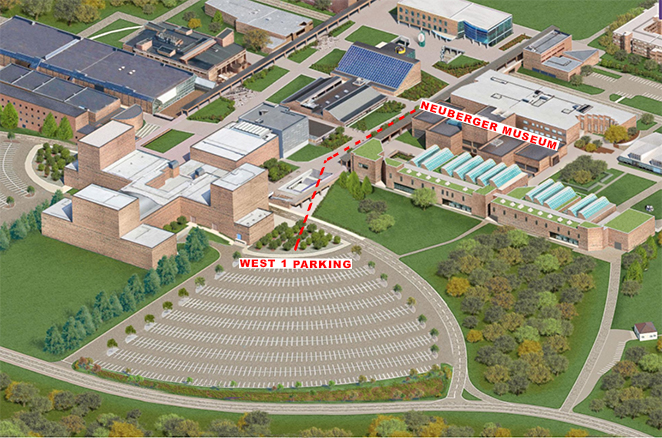
Museum visitors should park in the West 1 Visitor Parking Lot. From the main entrance to the Purchase College campus, turn left and continue on the West Loop for approximately one mile; the entrance to the West 1 parking lot will be on your right.
Use the pay station located near The Performing Arts Center (located near the ADA-accessible handicap parking spaces) to obtain your parking receipt. Select the duration of your stay and follow the on-screen instructions to obtain your printed receipt. Be sure to place the receipt face up on your vehicle’s dashboard.
After parking in West 1, cross the roadway towards the main entrance to campus. (Your landmark will be the white lettering reading “Welcome to Purchase College.”) Below this lettering is a glass case with a map of the campus you can use to orient yourself. To get to the plaza level where the museum is located, take the steps or the elevator.
Stairs to the plaza level are located to the right of the amphitheater. Once on the plaza, proceed along the South Arcade (covered walkway). The Museum will be the second building on your right. The entrance is directly across from the large pillar with the “Neuberger Museum of Art” name and color bar.
Elevator access to the plaza level is available inside the Center for Media, Film, and Theatre. When facing the amphitheater and staircase, to your left is a set of glass doors. Enter the CMFT Building and proceed ahead and then to the left through another set of doors. The elevator will be on your right. Button “2” will take you up to the plaza level. As you exit the elevator enclosure, proceed ahead to the South Arcade (covered walkway) then follow the walkway to the left. The Museum will be the second building on your right. The entrance is directly across from the large pillar with the “Neuberger Museum of Art” name and color bar.
Special Needs Access
The Neuberger Museum of Art is wheelchair accessible throughout the building, including galleries and restrooms. Wheelchairs are available without charge at the museum’s entrance. Gallery stools are available by request.
Please click here for a map to the drop-off point for visitors with special needs. To learn more, please call 914-251-6100 Monday through Friday from 9am - 5pm or 914-251-6117 on Saturday and Sunday from 11am - 5pm.
Click here to report any accessibility barriers you experience on campus.
Hours
Open
Wednesday - Sunday
noon to 5pm
Closed
Monday - Tuesday
Admission
Admission is currently FREE for all visitors.
Always Free To:
- Members
- Purchase College students
- Purchase College faculty, and staff
- Purchase College alumni
- Children 12 and under
- Members of reciprocal museums
As a proud member of the
Blue Star Museum collaboration,
the Neuberger Museum offers free admission to the nation’s active-duty military personnel and their families, including National Guard and Reserve, from Memorial Day through Labor Day.
Tours and Programs
The Neuberger Museum of Art offers education programs which introduce visitors to American art of the 20th century, traditional African art and contemporary art through visitor-centered experiences. The museum staff develops and implements educational programs, under the umbrella of The Phillip and Lynn Straus Center for Education in the Arts, that serve diverse audiences and establish the Neuberger Museum of Art as a regional center for curriculum-based art education.
Tours and Groups
The Neuberger Museum’s docent educators welcome visitors and help them appreciate the art collections presented in our galleries. The art comes alive as you walk the museum with a docent and hear the stories behind the artists and works on view.
To arrange a guided or self-guided group tour, please contact the Education Department via e-mail or phone (914) 251-6110.
Adult Tours ($8 per person)
School Tours ($8 per person)
Pre-K-12 School Tours
Each school visit is unique. We curate your experience by creating classroom connections that tie our African, Modern and Contemporary art directly to your curriculum. Our goal is to help students develop an appreciation for visual art by creating descriptive dialogue that leaves a lasting impression. We are flexible and work with teachers to meet curriculum objectives and learning standards. (Max Group Size 50 students)
NeuKids Program
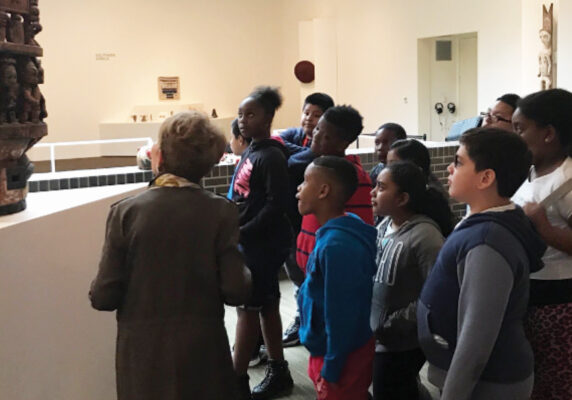
The Neuberger Museum of Art’s NEU Kids program fills an educational gap by providing field trips to the museum for close to 2,000 local children each year. This includes waived admissions, round-trip school bus transportation, lunch, and guided tours with talented docents who bring the galleries to life! This program is fully subsidized for Title 1 and other qualifying schools.
Membership
As a member of the Neuberger Museum of Art at Purchase College, SUNY, you are a champion for those who make art, engage with art, and discover meaning through art.
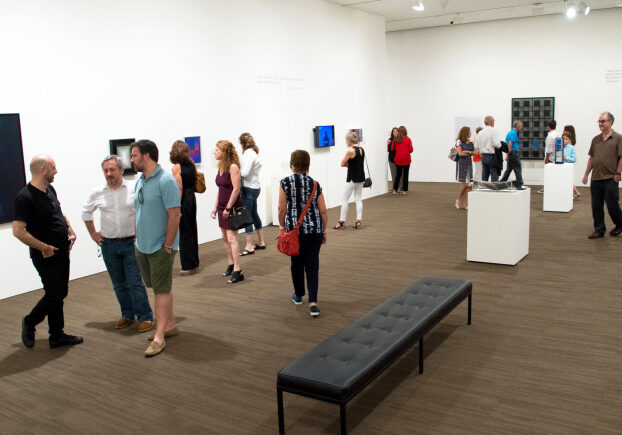
Members empower the NEU to move boldly forward, continuing founding patron Roy R. Neuberger’s legacy by showcasing the work of contemporary global artists, fostering arts education, and building a creative community through art. In return, members enjoy benefits such as free parking, discounts in the NEU Museum Store, and invitations to programs and special events through the year.
Donate
Support the Neuberger Museum of Art by contributing to the Annual Fund! Your contribution makes the work we do at the Neuberger Museum possible. Your support allows us to continue caring for our world-class permanent collection, present acclaimed special exhibitions, and produce dynamic education programs. Gifts made to the Annual Fund are 100% tax-deductible within the limits prescribed by law.
If your company has a matching gift program, you can double and sometimes triple your impact! For more information, please contact 914-251-6114 or email nma.development@purchase.edu.
Thank you for your support!
About the Neuberger Museum of Art
The Neuberger Museum of Art is a center of teaching and learning for all stages of life. Experience exhibitions of modern, contemporary and African art and art-inspired events in our Philip Johnson-designed building at the heart of Purchase College, State University of New York.
Founded in 1969 with a promised gift of 300 works by Roy R. Neuberger—one of the greatest private collectors, philanthropists, and arts advocates of the twentieth century—the Museum’s collection has grown to over 6,000 objects by artists including Milton Avery, Romare Bearden, Willem de Kooning, Edward Hopper, Georgia O’Keeffe, and Jackson Pollock.
Our signature biannual award, the Roy R. Neuberger Prize, recognizes the work of exceptional contemporary artists, continuing our founding patron’s dedication to supporting artists early in their careers.
Alongside our permanent collection, critically acclaimed special exhibitions draw local, regional, and international audiences to our galleries in Westchester.
Tours, lectures, and programs engage our broad and diverse community. On any day, you can see adults, families, K-12 school children and their teachers, and Purchase College students, faculty, and staff enjoying the museum.
At the Neuberger, appreciating art is active and interactive. Here, students, scholars, artists, and art lovers find common ground to experiment, question, and grow.
About the Friends of the Neuberger Museum of Art:
Friends Board members provide advice, counsel, and seek to ensure that the Museum has the support and resources needed to realize its goals.
The Friends of the Neuberger Museum of Art is a 501(c)(3) organization founded to support the Museum as it fosters a diverse community where art thrives and people are inspired to engage with new ideas. This support enables the Museum to host events for our public and members, produce world class exhibitions, provide art education opportunities for underserved students, and be a cultural ambassador to all those who visit us.